AI Moderator: Structured vs. Freeform Discussion Style
Last updated: August 14, 2026
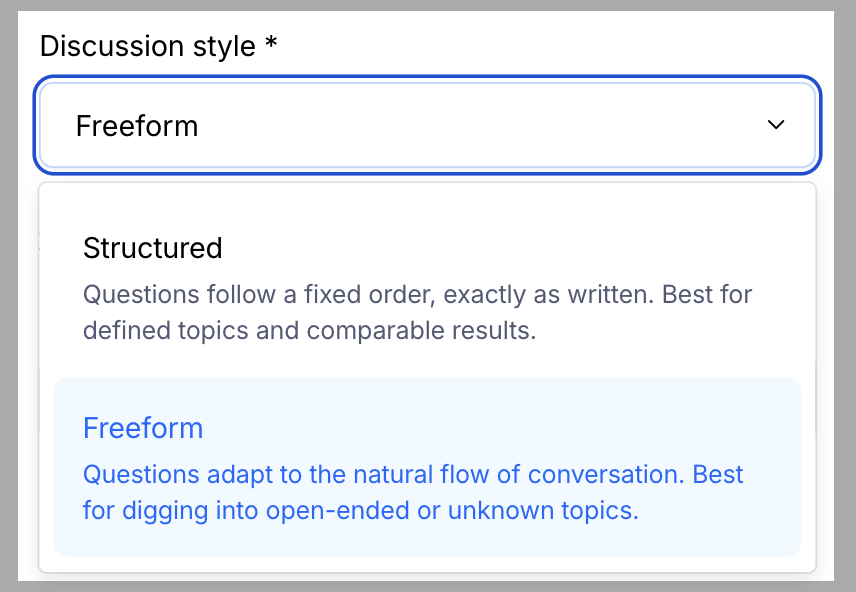
When building your AI Moderated study, 'Conversation only' and 'Conversation with image' goal formats can have a different discussion styles. This setting defines how questions are presented and how the discussion flows: whether questions should be asked exactly as written, or if the AI adapts based on participants’ answers. This helps you balance consistency and depth in your research.
There are two styles you can choose from: Structured and Freeform.
Structured
In a structured conversation, questions are asked exactly as written and in a fixed order. Each participant experiences the same sequence of questions, creating consistent conditions across sessions.
Use it when:
You have a clear, predefined set of questions
You want to collect specific, comparable information
You need consistent data across participants
Examples:
Gathering demographic data, like age, role, or experience level
Testing specific product flows or wording, where you want answers to identical prompts
Following a scripted survey or benchmark study, where question order affects interpretation
Benefits:
Keeps data consistent across sessions
Makes it easier to compare results and measure trends
Reduces variation introduced by adaptive or follow-up questions
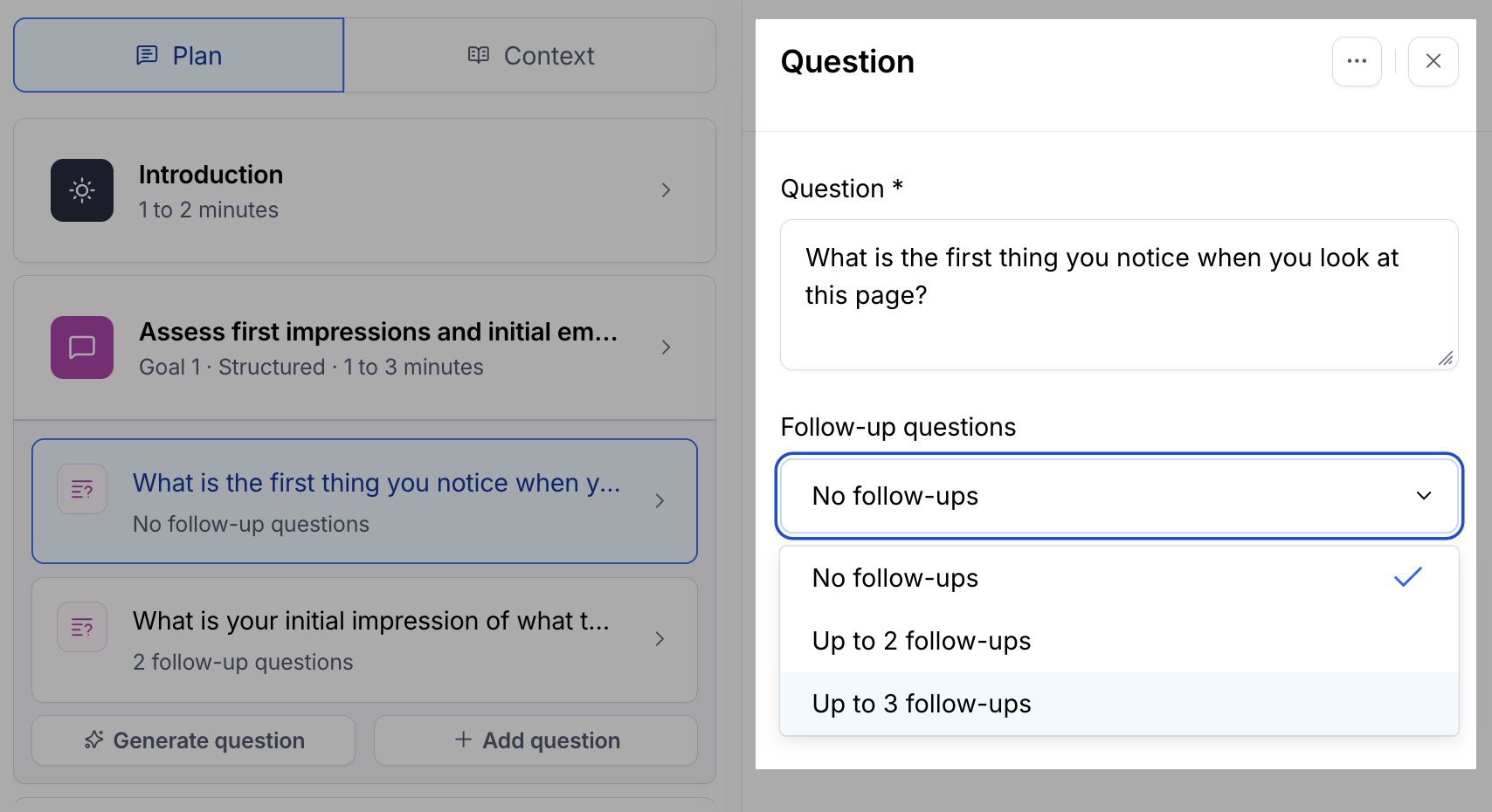
With the structured discussion style, you'll notice specific questions are pre-populated alongside the goal with a recommended set of follow-up questions that can be adjusted as you see fit.
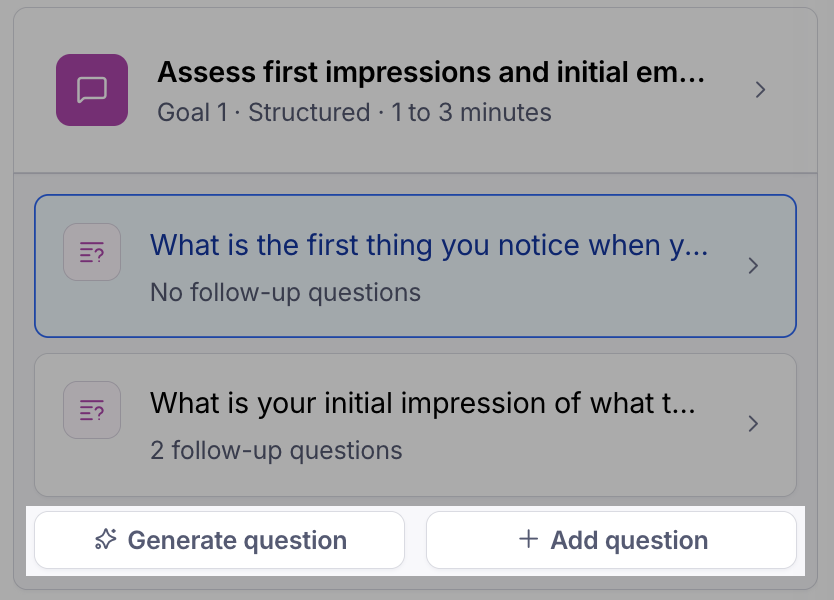
If you would like to add additional questions, you can click Generate question to auto-populate a question or manually create your own by clicking Add question.
Freeform
In a free-form conversation, the AI adjusts questions and follow-ups based on participants’ responses. The flow feels more natural and can branch into relevant topics as they arise.
Use it when:
You’re in early research stages and want to explore ideas or problems
You’re collecting feedback on concepts, prototypes, or messaging
You want to understand motivations, behaviors, or experiences in more depth
Examples:
Exploring how participants describe a pain point in their own words
Asking for feedback on a new idea to learn what resonates and what doesn’t
Running concept discovery sessions to identify new directions for research
Benefits:
Encourages richer, more natural responses
Surfaces insights or themes you might not anticipate in a fixed script
Helps uncover areas to explore further in later studies
Still need help?
If you have any questions or concerns, please let our Support team know — we'll be happy to help!