Editing your study with the Study Assistant
Last updated: September 3, 2026
When you create an unmoderated study with AI-guided setup, you no longer have to switch to fully manual edits once you reach the builder. The Study Assistant keeps AI available inside the builder through a chat panel, so you can move back and forth between editing by hand and asking the Assistant to make changes for you.
You can ask the Study Assistant to add, remove, modify, or reorder blocks, update study-level settings like the study name, device restrictions, and recording preferences, and make larger structural changes across your study — all while you build.
Who can use this feature
The Study Assistant is available for users on our Enterprise plan
Before you start
The Study Assistant is available for Unmoderated studies created through AI-guided setup. You'll need to start a study with AI-guided setup and continue to the builder before the Assistant appears. If you haven't used it before, see Setting up an unmoderated study with AI.
Only the study creator can use the Study Assistant on a given study.
The Assistant works alongside manual editing — you can keep using the builder as you normally would at any point.
Opening the Study Assistant
Create a study using AI-guided setup:
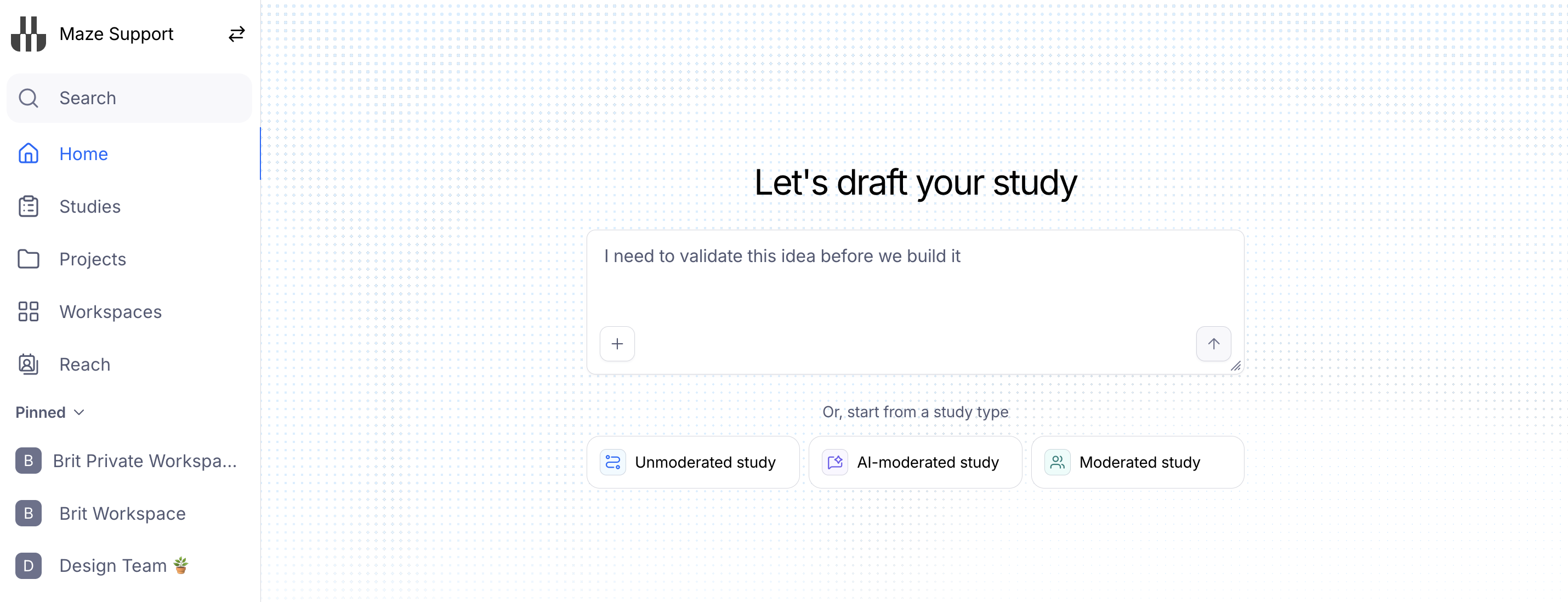
Once the AI has proposed your study, click Continue to Builder.
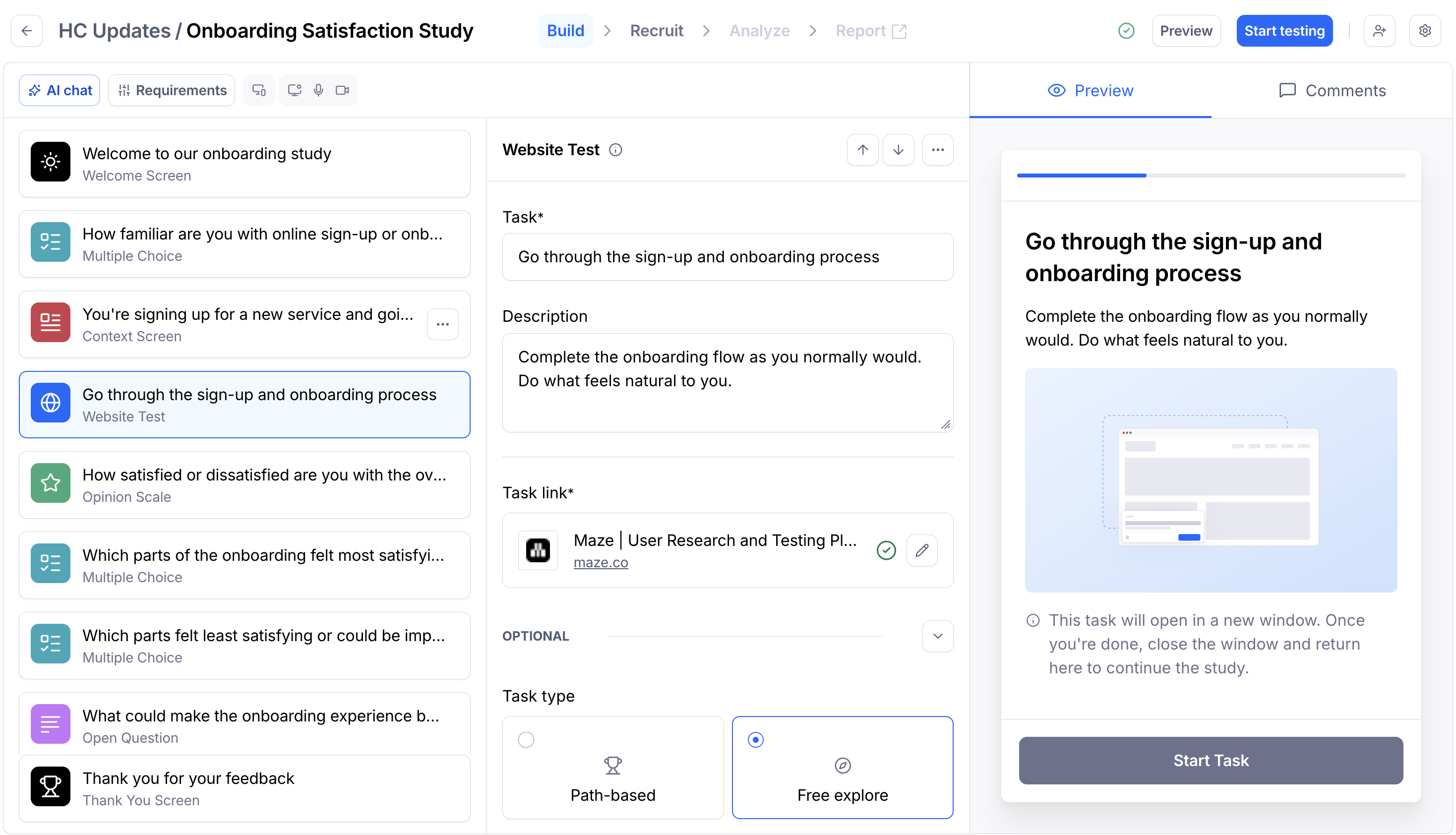
In the builder, click AI chat (near the upper-left corner of the builder header.
The Study Assistant panel opens on the left side of the builder. The block list on the right becomes more compact to make room for the conversation.
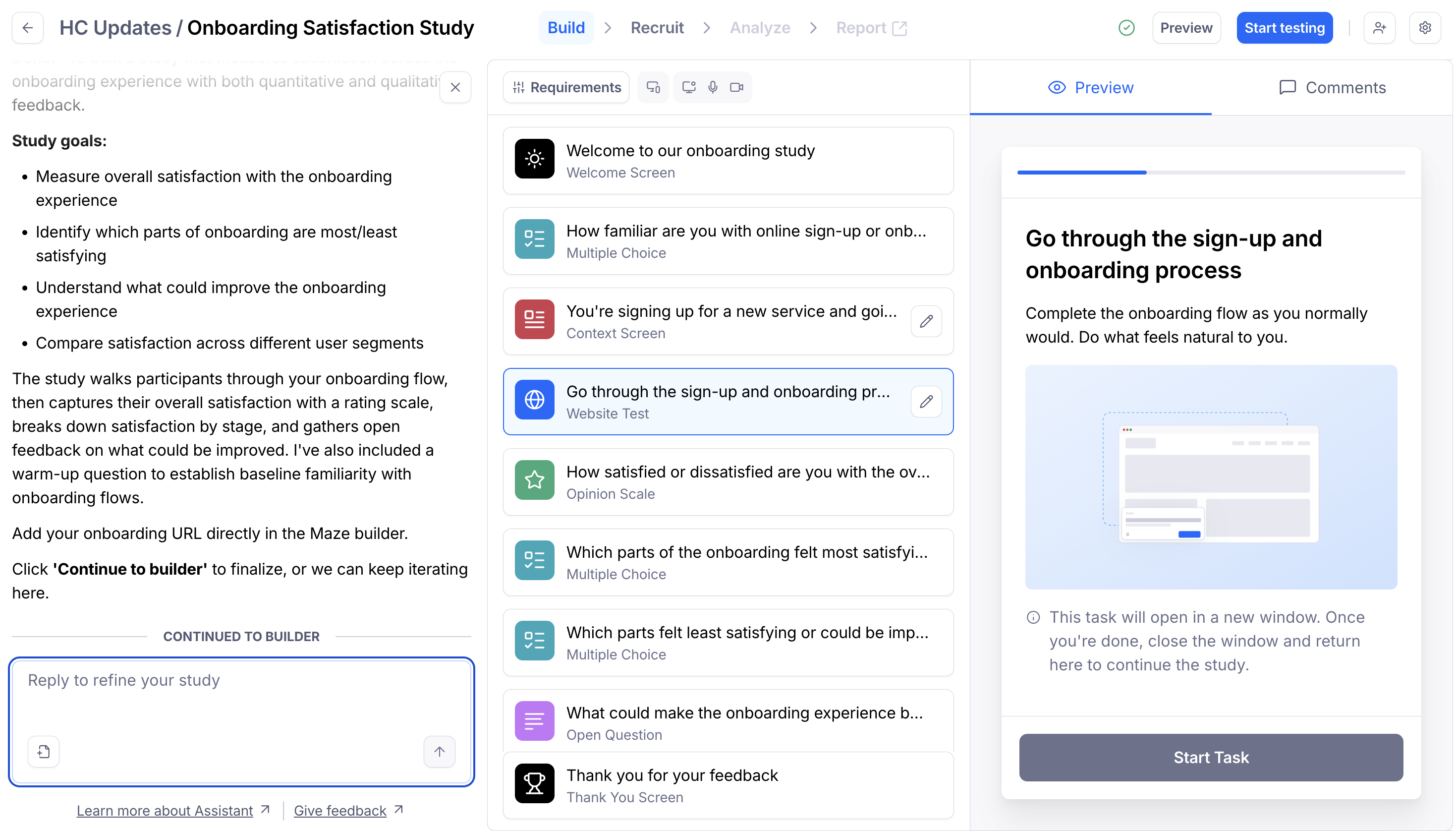
From here, type what you'd like to change in the chat input and the Assistant will apply the change to your study. When suggestion chips appear, you can tap one to guide your next step instead of typing a full request.
Make small, targeted edits
Use the Assistant for precise, single-block changes. Be specific about which block you mean and what you want changed.
Example requests:
"Add a rating scale block after the first question."
"Remove the second opinion scale."
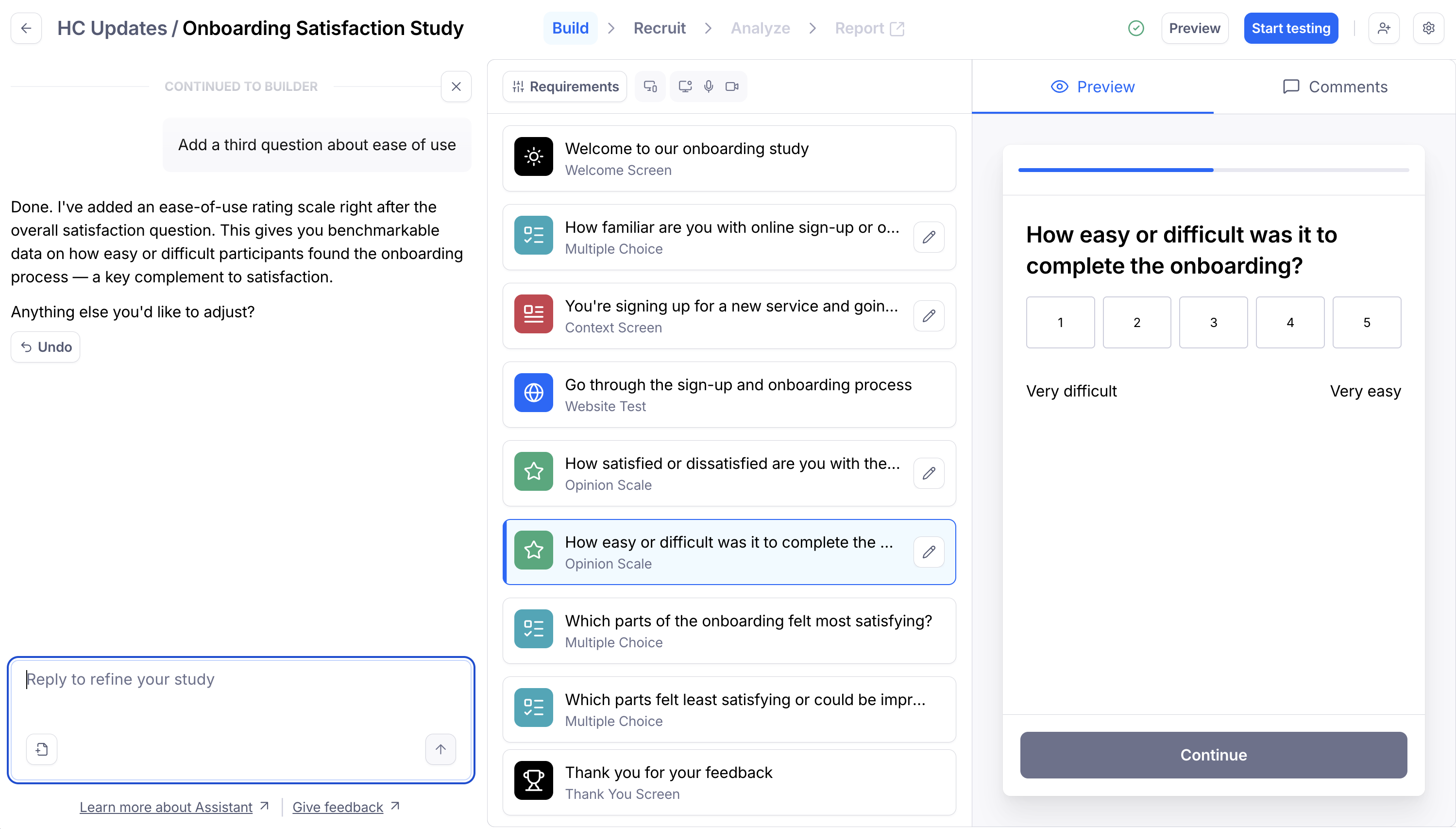
"Change the third question to ask about ease of use instead."
"Make the welcome screen greeting more friendly."
The Assistant updates only the block you're referring to and leaves the rest of your study intact.
Make larger, structural edits
The Assistant can also handle broader requests that affect multiple blocks or the overall shape of your study.
Example requests:
"Make the study shorter — keep only the most important questions."
"Add a section about the onboarding experience with 2–3 questions."
"Reorder the blocks so demographic questions come last."
For bigger changes, review the result to make sure the new structure matches what you intended before moving on.
Change study-level settings
Beyond blocks and questions, you can ask the Assistant to update study-wide settings.
Example requests:
"Rename this study to 'Q3 Checkout Usability'."
"Restrict this study to mobile devices only."
"Enable session recording."
After the Assistant makes the change, you can verify it in the builder UI just as you would for any setting you'd changed manually.
Undo a change
Every AI-driven change can be reversed.
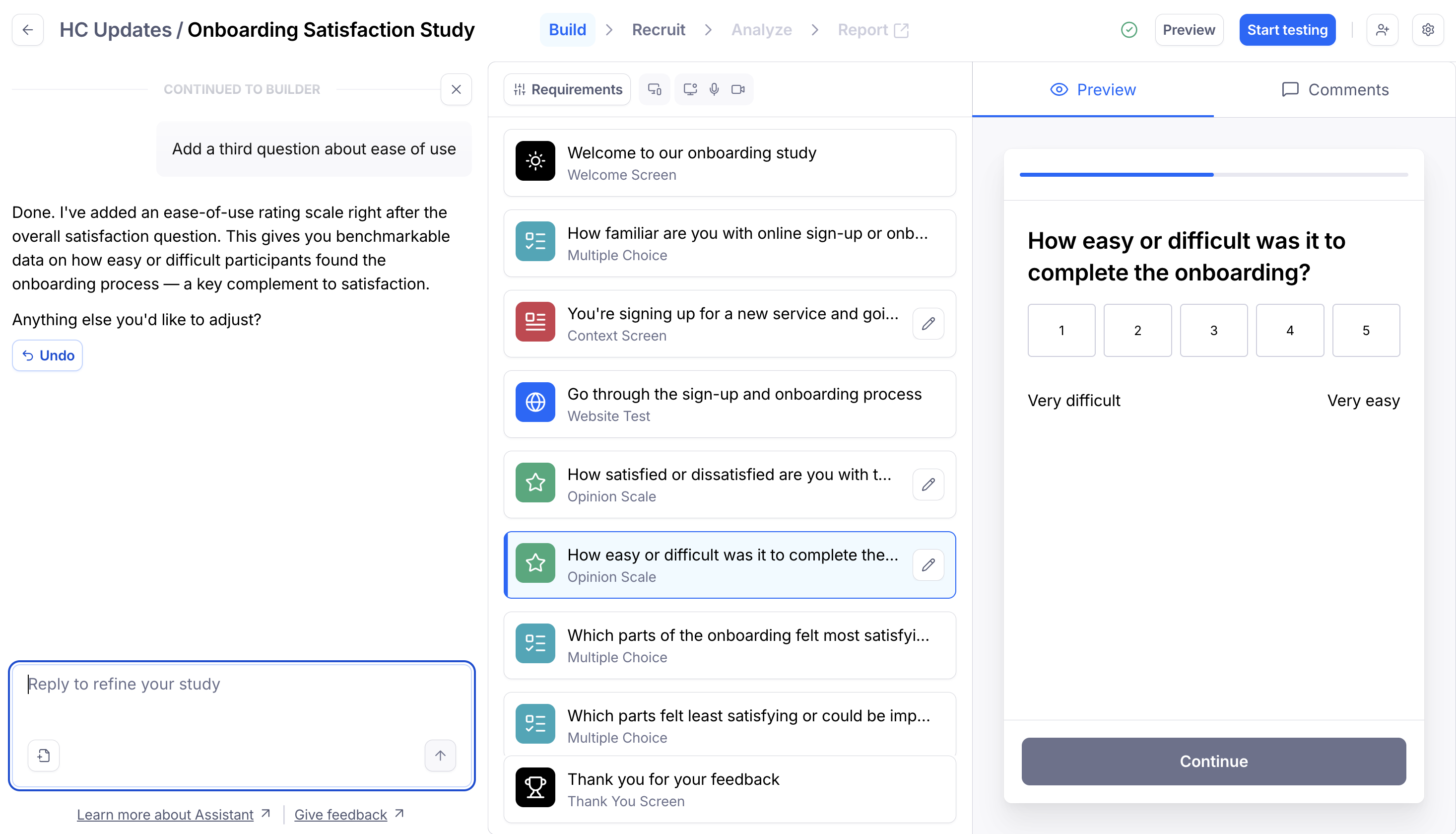
After the Assistant makes an edit, an Undo button appears below the text.
Click Undo to return your study to the exact state it was in before that change — including blocks, their order, and study-level settings.
You can then continue the conversation and ask for a different change.
Mix manual and AI edits
The Study Assistant is designed to work together with manual editing, not replace it. You can:
Use the Assistant to generate a few blocks, manually tweak one, then ask the Assistant for another change.
Manually add a block (for example, a prototype test or a form), then ask the Assistant to modify the rest of the study.
Delete a block by hand, then ask the Assistant to add something new.
Your manual edits are preserved when the Assistant makes unrelated changes, so you can move between the two ways of working freely.
Best practices
Getting great results from the Study Assistant comes down to clear requests and a quick review of each change. Think of it as a building partner that's fast at making edits but works best when you point it in the right direction.
Be specific. Name the block and the change you want — for example, "reword the second question" rather than "fix the questions."
Make one change at a time for precision. Smaller, targeted requests are easier for the Assistant to apply accurately and easier for you to review.
Review larger edits. After structural changes, check that the resulting flow and questions match your research goals.
Use Undo freely. If a change isn't quite right, undo it and rephrase your request — nothing is committed until you're happy with it.
Preview before going live. Once your study looks right, preview it to confirm the flow reads the way you intend.
Still need help?
If you run into any issues with the Study Assistant — change quality, unexpected edits, or anything technical — please contact our Support team.