Have participants categorize information using Card Sorting
Last updated: August 7, 2026
Card sorting allows you to discover how your users categorize and understand information. It's a great way to understand how your users think about the structure of your design.
Card sorting is useful to:
Validate how people perceive information on a website or app.
Understand where users expect certain content to be found.
Get inspiration for labeling and grouping content.
Segment how different user groups understand the content.
Who can use this feature?
Closed card sorting is available in all paid plans.
Open card sorting is available in the Team and Enterprise plan.
Best practices
While there's no hard limit on the number of cards/categories you can include in a Card Sort, we'd recommend limiting them to avoid overwhelming your participants.
To avoid bias, you have the option to shuffle cards and/or shuffle categories so that they're presented to participants in random order.
For more best practices, check out our card sorting guide!
Create a card sorting block
Here's how to add a card sorting block to your study:
Open your draft study, or create a new one.
Click Add block.
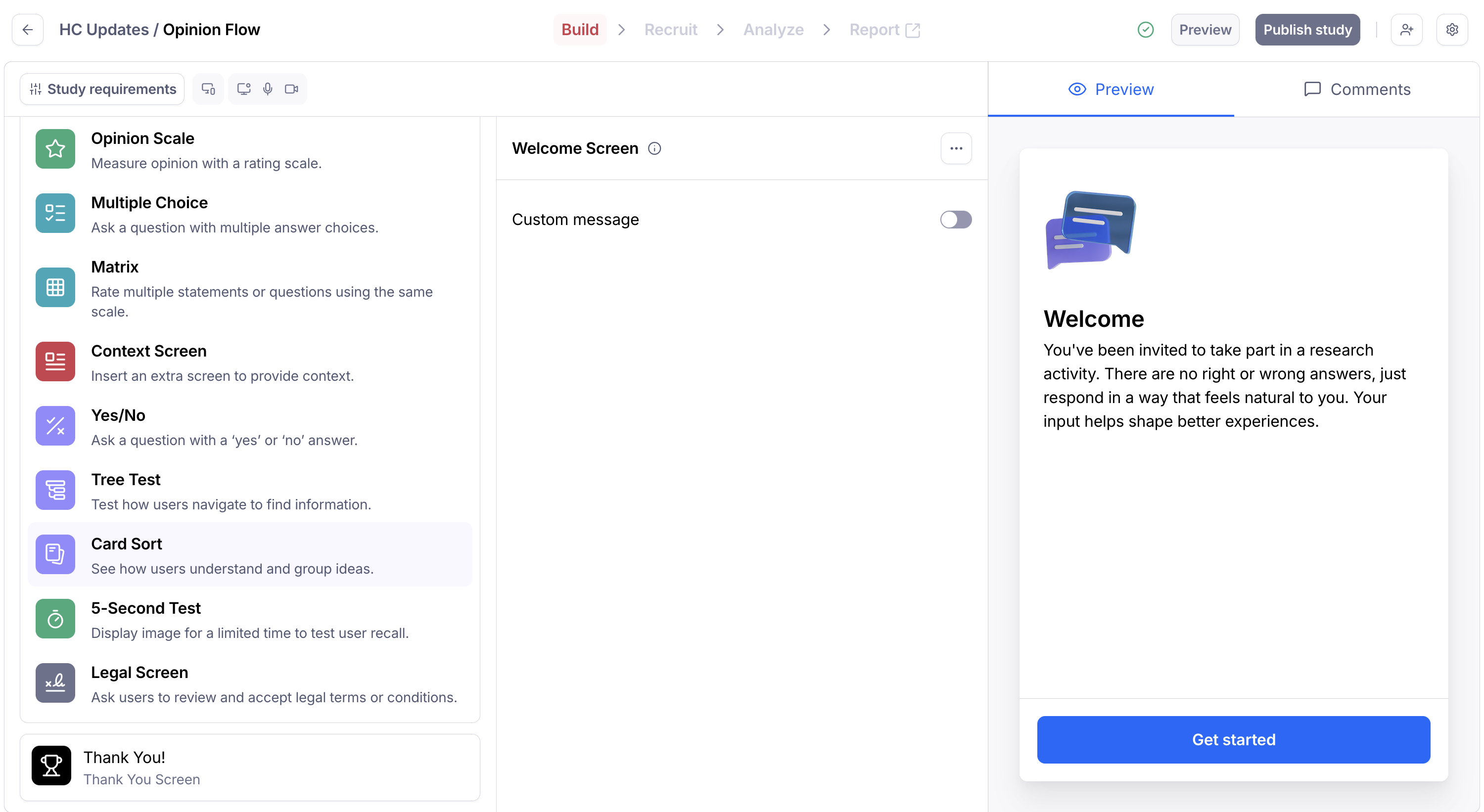
Choose Card Sort from the list of blocks.
Customize your card sorting instructions
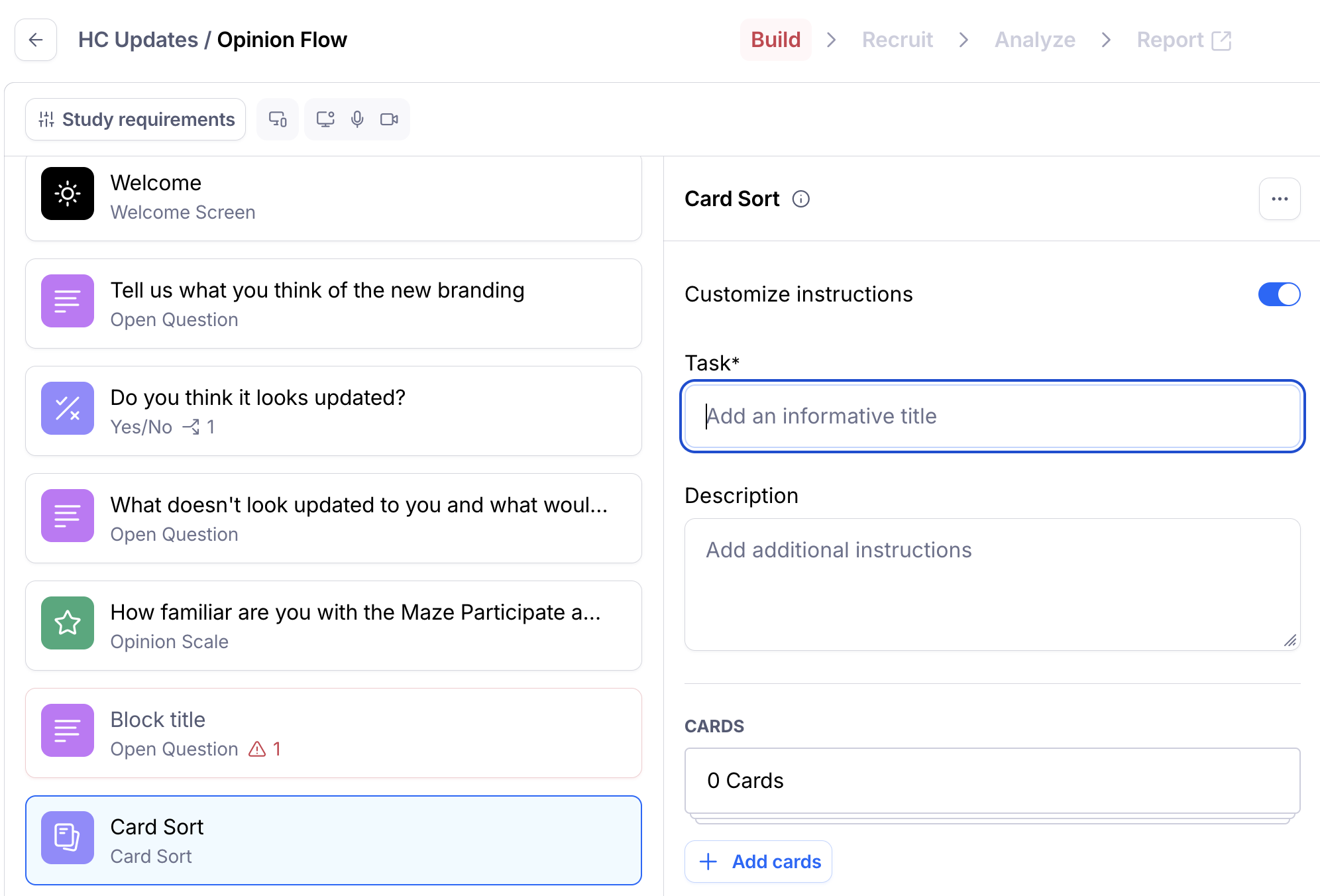
You can use the default title and instructions you see in the preview.
To add your own, enable the Customize instructions toggle.
Add and edit your cards
Add cards
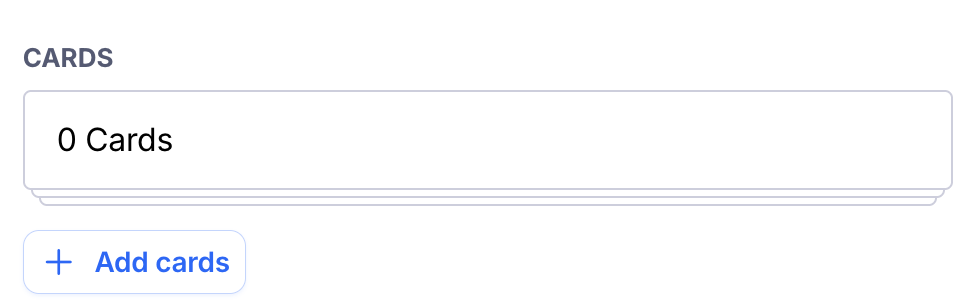
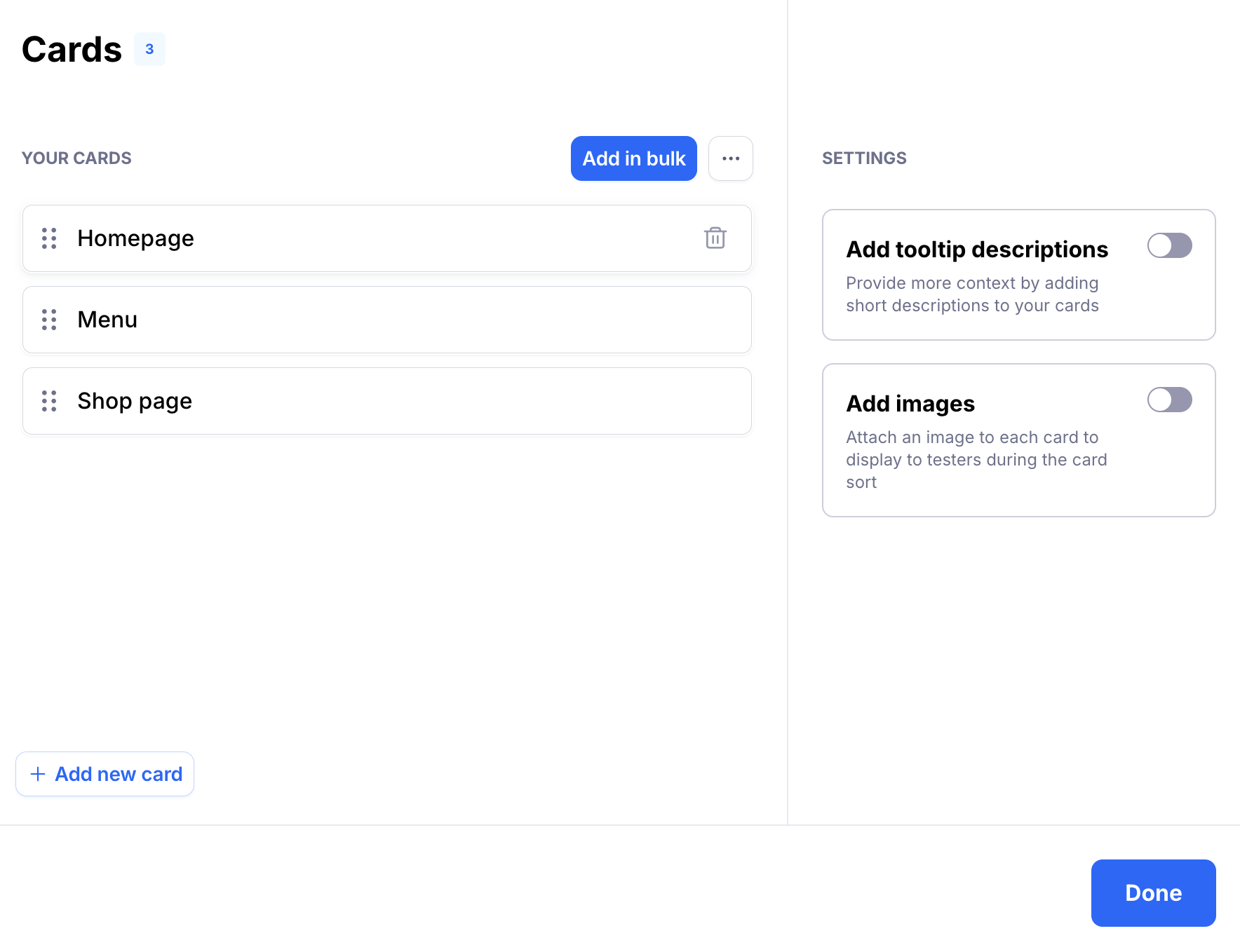
Click + Add cards to open the cards editor and add the cards to be sorted (at least 1).
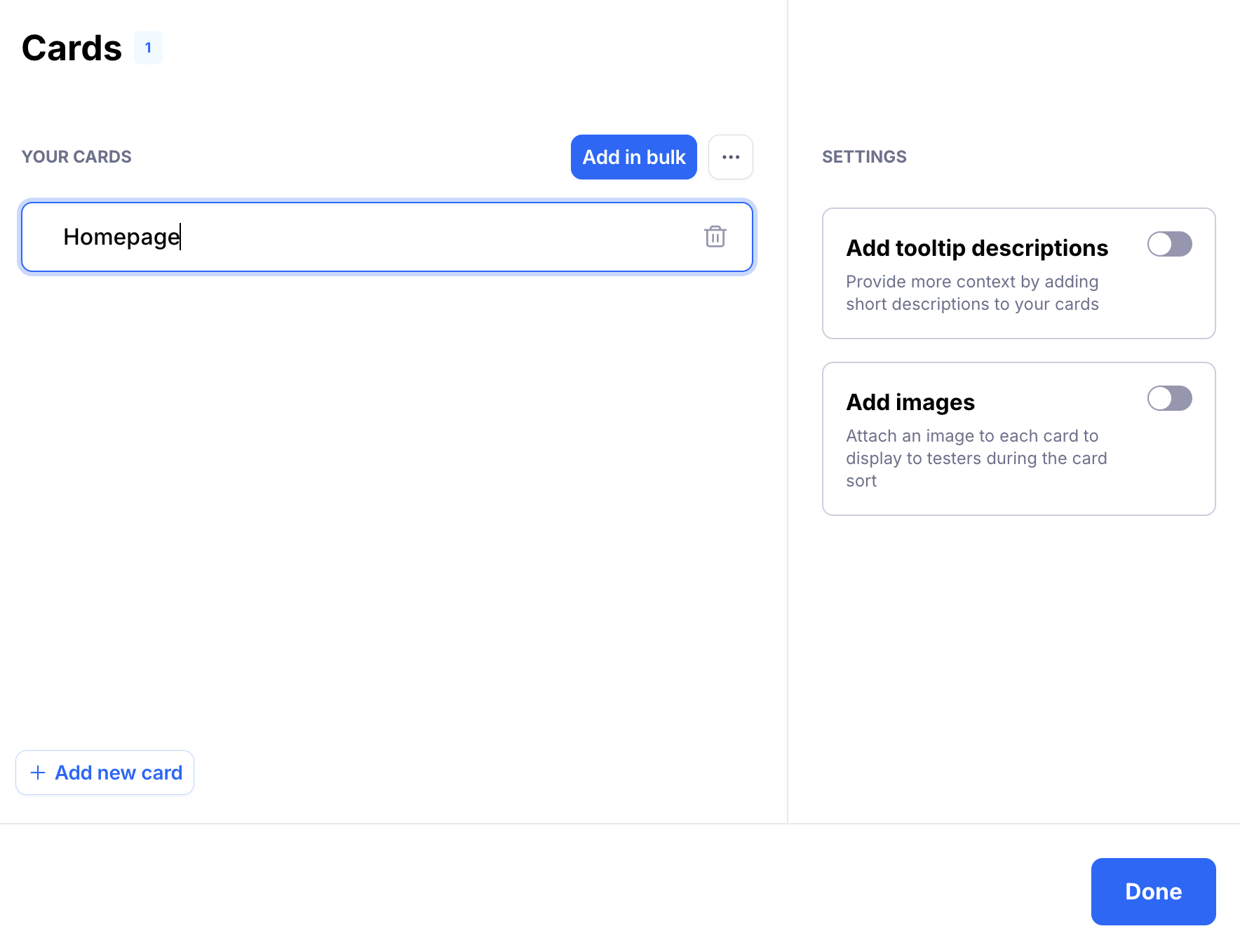
To add cards individually, click + Add new card, type the name of the card, and press Enter.
To add a batch of cards, click Add in bulk and paste the cards, separated by a comma or a new line.
To save, click Done.
You set a maximum number of cards that can be added to each category. Learn more about limiting the number of cards per category
Edit cards
To edit existing cards, click + Edit to open the card editor.
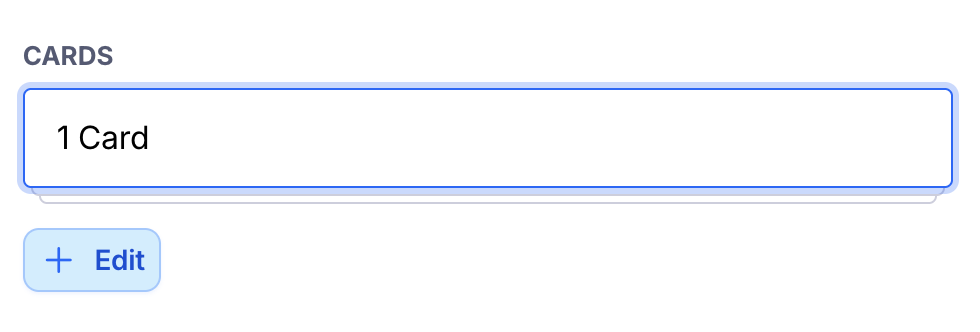
Click each card to edit it. Click and drag to change the order of the cards.
Card settings
In the card editor, you can also access the following settings:
Add tooltip descriptions to your cards
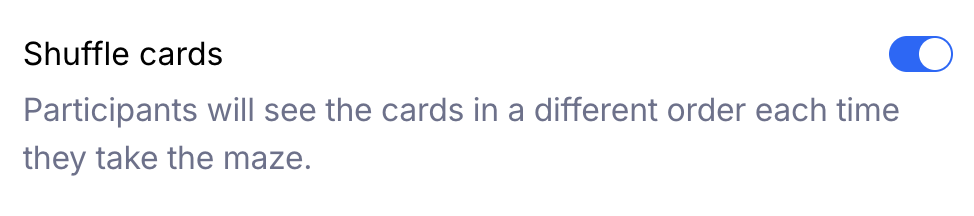
Shuffle cards
If needed, enable Shuffle cards to present cards in random order. This might be helpful to reduce bias.
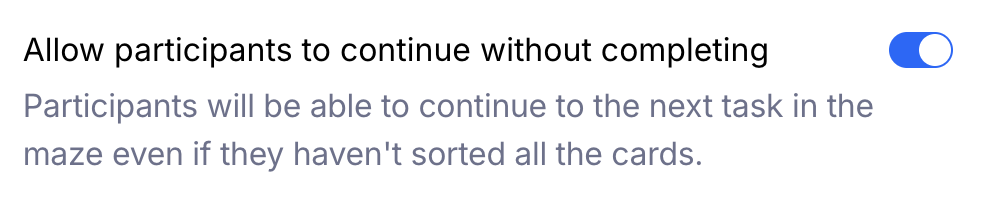
Allow participants to continue without completing
If needed, enable Allow participants to continue without completing to allow participants to continue without having to sort all cards.
This might be helpful to prevent skewed results caused by participants placing cards in a random category just to move on with a study (for instance, if they're unsure what a card means or where it should be placed).
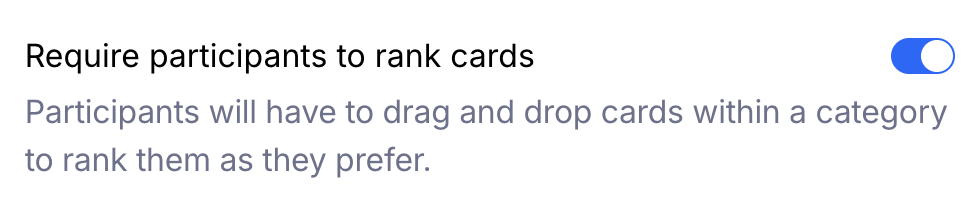
Require participants to rank cards
If needed, enable Require participants to rank cards to prompt participants to rank cards according to preference or priority.
Learn more about ranking items using a Card Sort block
Delete cards
To delete cards, open the card editor and click the Delete (🗑) icon next to each card name.
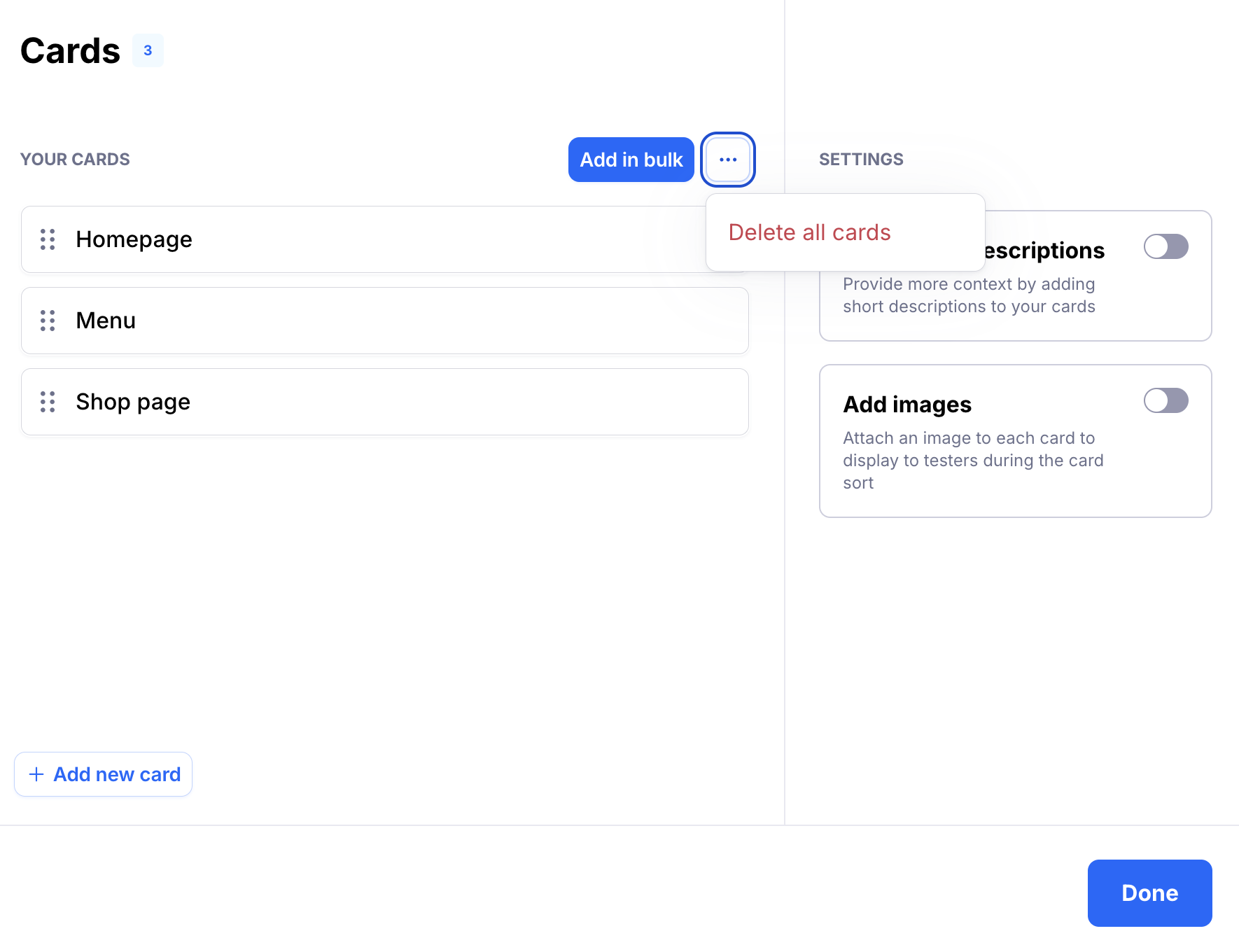
To delete cards in bulk, click the More (•••) menu and select Delete all cards.
Set the card sorting type (open vs. closed)
With Maze, you can run both open and closed card sorts. Hybrid card sorting is not currently supported — if this is something you'd be interested in, please let our team know!
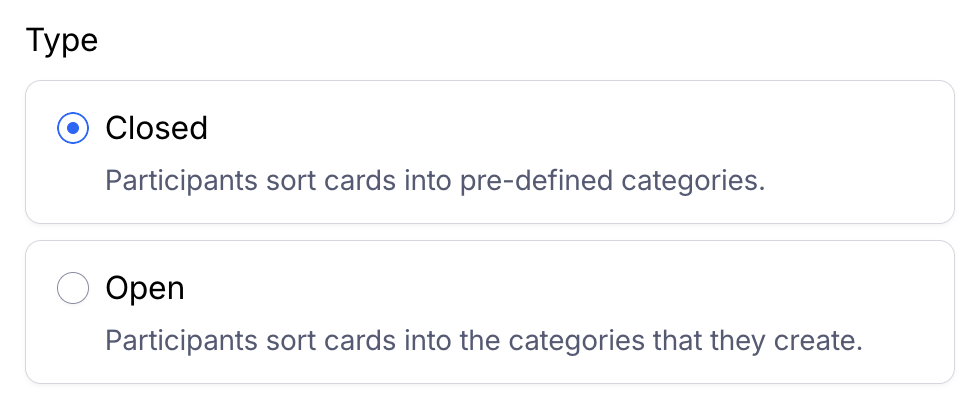
Closed: Participants group cards into predefined categories. This method works well at later stages of a project, as it allows you to evaluate whether already established terminology and structures are intuitive to your users.
Open: Participants group cards into categories they create. This more flexible approach works well in the early/exploratory stages of a project, when you're looking to get a more accurate grasp of your users' mental models for grouping and labeling content.
Open card sorting is a Team and Enterprise feature.
Depending on the complexity of your project, it might make sense to use both approaches iteratively: start with an open card sort to discover how participants categorize and label your content, then at a later stage move to a close card sort to validate the decisions you’ve made based on the open card sort data.
To set the card sorting type, click the Closed or Open toggle in the study builder.
Add and edit your categories (closed card sorting)
You can only define categories if you've selected closed card sorting. In open card sorting, participants will create their own categories.
Add categories
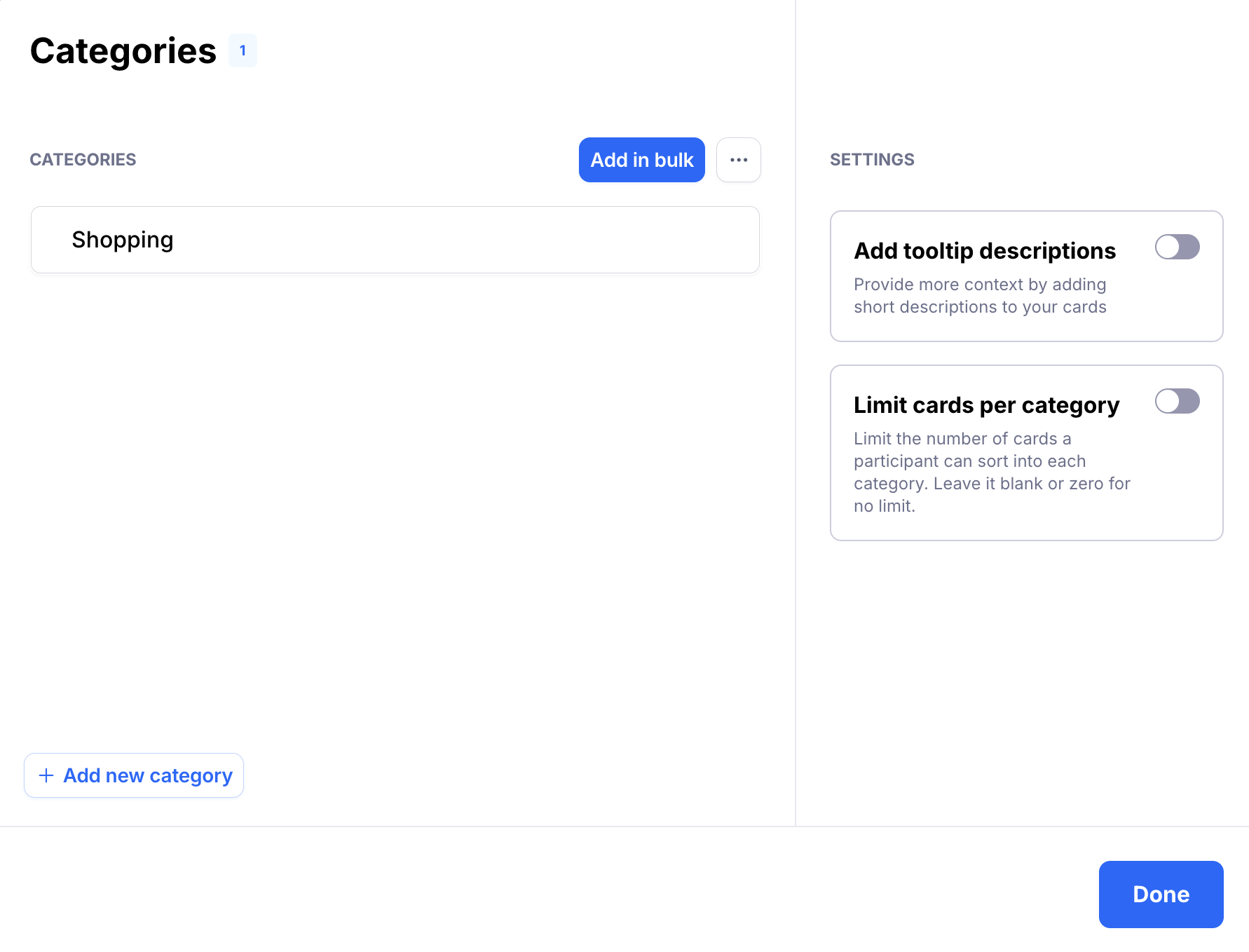
Click + Add categories to add the categories into which the cards should be sorted (at least 2).
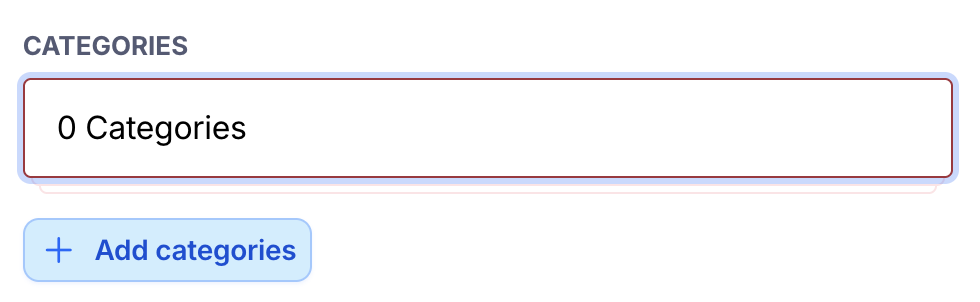
Click + Add new category to add categories individually.
To add a batch of categories, click Add in bulk and paste the categories, separated by a comma or a new line.
To save, click Done.
Edit categories
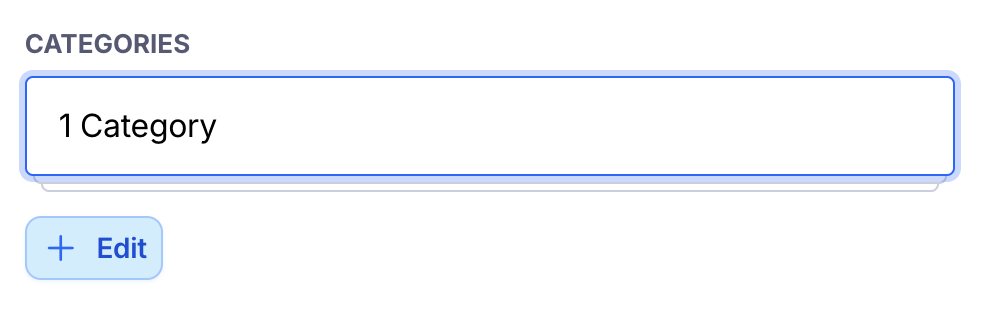
To edit existing categories, click + Edit to open the category editor.
Category settings
Open the category editor to access the following settings:
Add tooltip descriptions to your categories
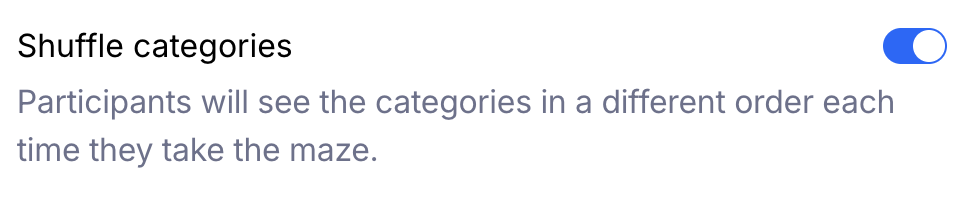
Shuffle categories
If needed, enable Shuffle categories to present categories in random order. This might be helpful to reduce bias.
Delete categories
To delete categories, click the Delete (🗑) icon next to each category name.
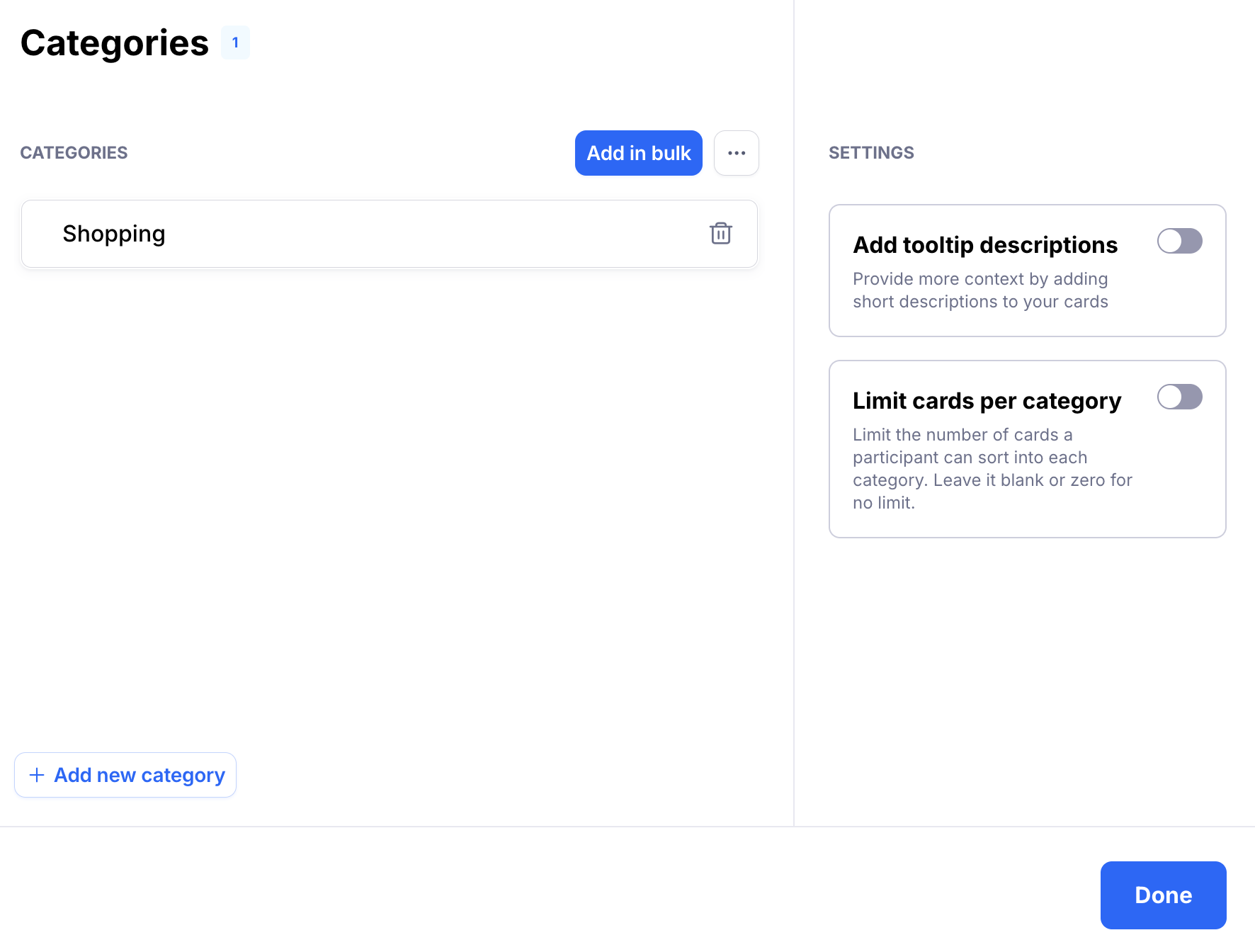
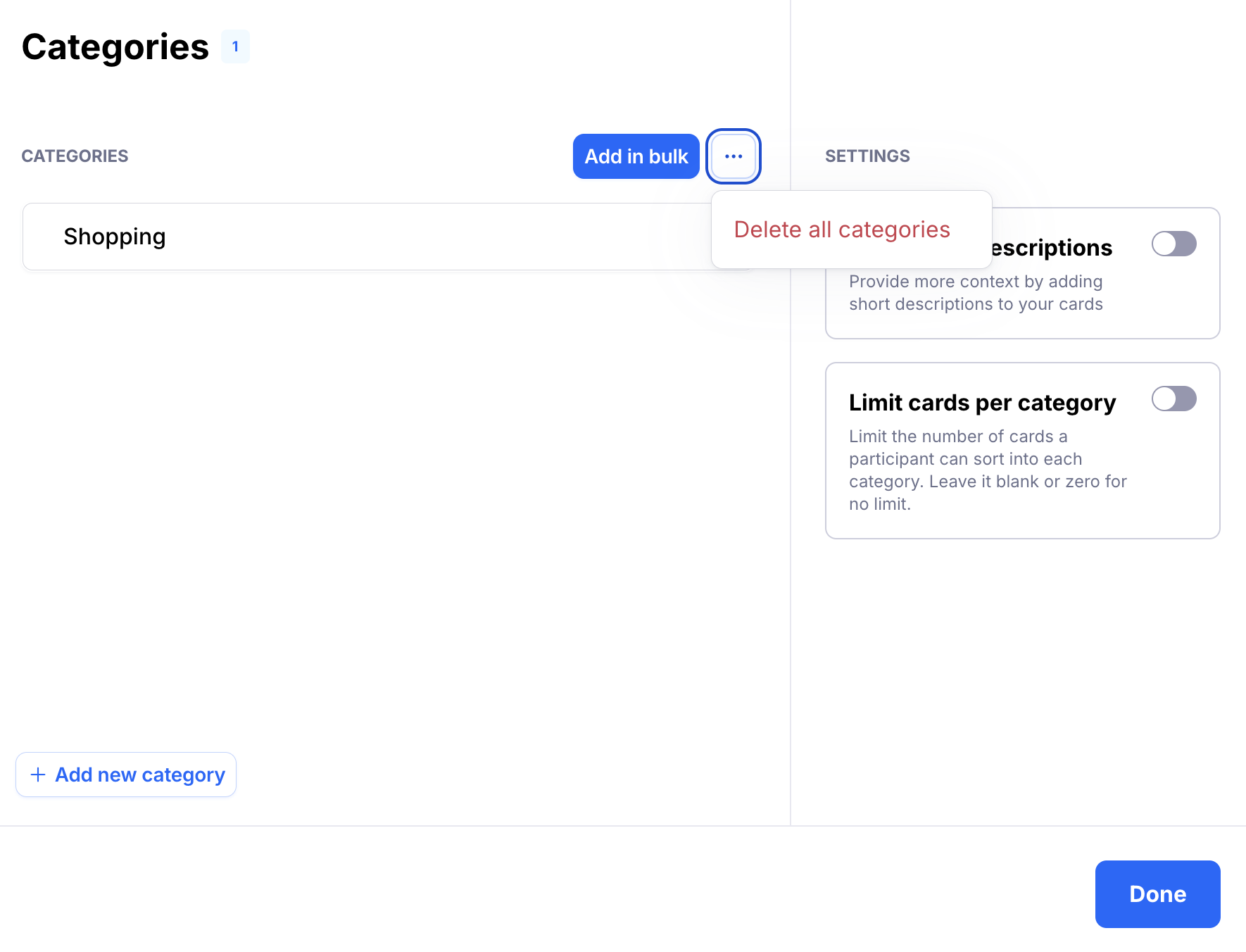
To delete categories in bulk, click the More (•••) menu and select Delete all categories.
Preview
See how your card sort block will look to participants in this article: Previewing a card sort block
Card sorting results
To learn more about your card sort results, check out this article: Understanding your card sorting results
Still need help?
If you have any questions or concerns, please let our Support team know — we'll be happy to help!